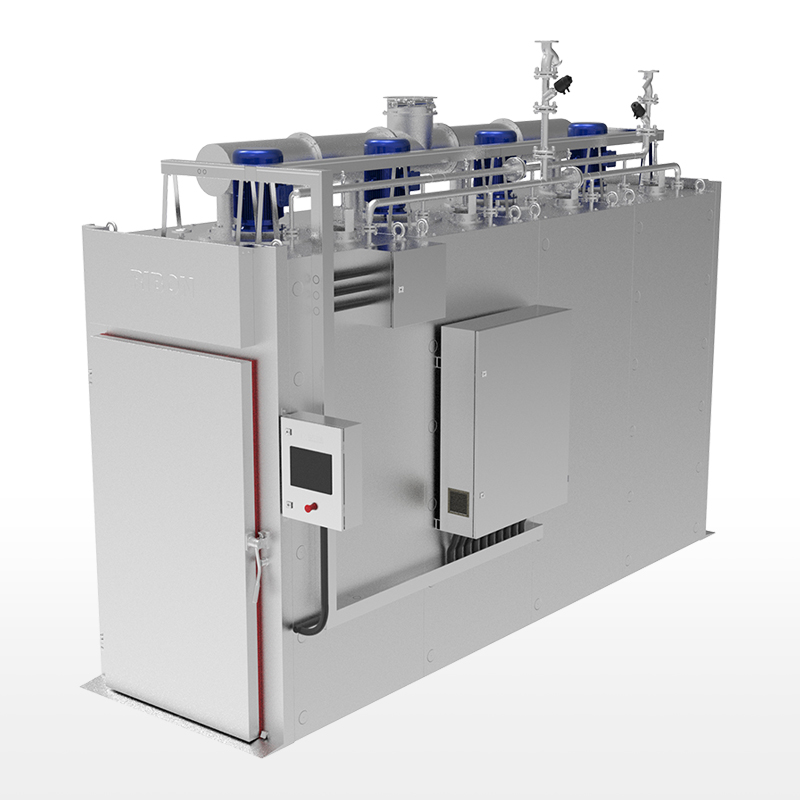
Ketika pengolah daging sapi mampu memproduksi 30 hingga 120 ekor per hari, meja potong manual menjadi penghambatnya. Tukang daging yang bekerja dengan kecepatan berbeda menghasilkan bobot porsi yang tidak konsisten, penurunan hasil, dan prosedur sanitasi terganggu. Jalur pemotongan daging sapi memecahkan masalah ini dengan mengintegrasikan pemotongan, pelepasan tulang, dan penanganan material ke dalam satu proses yang berkesinambungan. Keputusan untuk berinvestasi pada lini ini bukan hanya mengenai permesinan; ini tentang mengendalikan hasil, ketertelusuran, dan biaya tenaga kerja di pasar yang marginnya ketat.
Apa Fungsi Jalur Pemotongan Daging Sapi dan Mengapa Itu Penting
Jalur pemotongan daging sapi merupakan kombinasi dari konveyor, gergaji, stasiun pemotongan, peralatan pengupasan tulang, dan unit kebersihan yang disusun untuk memecah karkas menjadi potongan yang siap dijual. Nilai intinya adalah hasil yang konsisten: karkas yang hasil panennya bervariasi sebesar 0,5–1 kg di seluruh operator manual dapat diproses dengan variansi yang jauh lebih kecil jika jalur direkayasa dengan benar.
Dampaknya dapat diukur. Dalam operasi pemotongan daging sapi pada umumnya, kehilangan potongan akibat pemotongan yang tidak tepat dapat mencapai 2–5% dari berat karkas. Jalur otomatis dengan pemandu, pemberhentian, dan sabuk tersinkronisasi mengurangi kerugian tersebut. Mereka juga mempersingkat waktu penanganan, yang penting ketika karkas dipindahkan dari tempat pendingin ke tempat pemotongan. Untuk jalur hot boning, kecepatan proses pemotongan secara langsung mempengaruhi suhu daging dan beban pendinginan selanjutnya.
Apakah lini tersebut memproduksi bagian karkas utuh, potongan subprimal, atau porsi eceran akhir, tata letaknya harus sesuai dengan aliran produk. Jalur pemotongan daging sapi dapat dikonfigurasi untuk hot boning, dimana karkas dipecah saat masih hangat, atau cold boning, dimana karkas dingin diproses. Pilihan tersebut mempengaruhi beban pendinginan, waktu penanganan, dan jenis peralatan pemotongan yang dibutuhkan.
Selain hasil, ada keamanan pangan. Jalur yang dirancang dengan baik menempatkan bak cuci tangan dan alat sterilisasi pisau di setiap tempat kerja, sehingga operator dapat membersihkan dan mendisinfeksi bangkai tanpa meninggalkan tempat kerjanya. Perubahan alur kerja yang sederhana ini dapat mengurangi risiko kontaminasi silang dan menyederhanakan audit.
Komponen Inti dari Jalur Pemotongan Daging Sapi Modern
Peralatan sebenarnya dalam lini pemotongan daging sapi bergantung pada campuran produk: bahan dasar untuk diproses lebih lanjut, porsi eceran, atau potongan tanpa tulang. Namun, beberapa komponen penyusun tetap umum di sebagian besar instalasi.
Stasiun Pemotongan dan Deboning
Gergaji bundar adalah pekerja keras di lantai pemotongan. Gergaji bundar tipe meja lebih disukai untuk pemotongan kecil dan presisi pada bagian seperti tulang rusuk atau pinggang pendek. Gergaji bundar tipe vertikal menangani bagian besar seperti bagian belakang. Gergaji food grade modern menggunakan rangka baja tahan karat, motor tahan air, dan pelindung mata pisau yang mudah dilepas untuk dibersihkan.
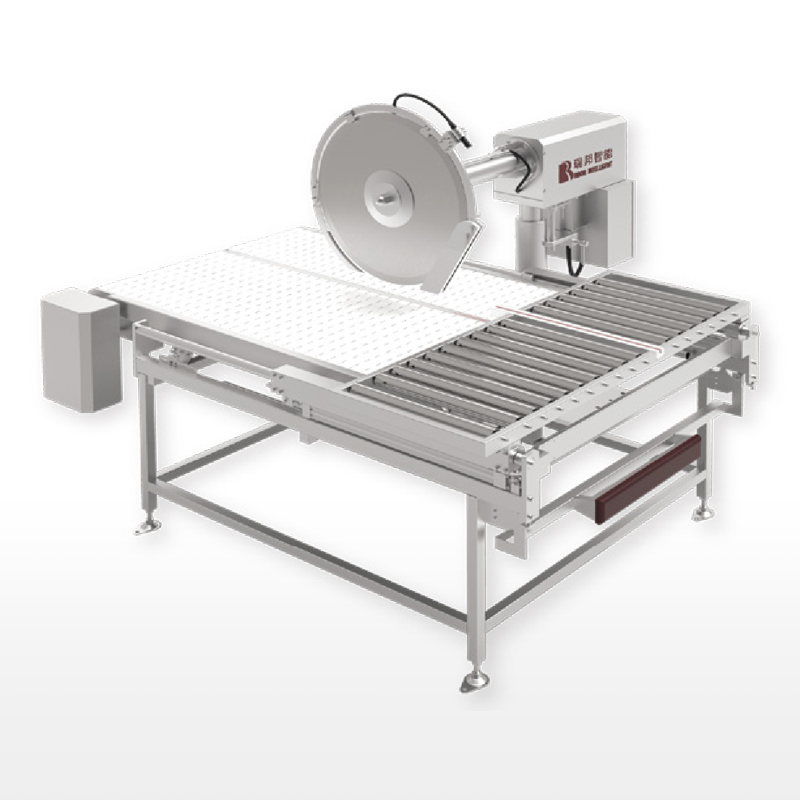 Gergaji Pisau Bundar Tipe Meja untuk Pemotongan Daging yang Presisi Gergaji meja ini dilengkapi rangka baja tahan karat, pengangkat hidrolik, dan pemosisian laser untuk pemotongan yang akurat. Dapat diputar 180° untuk dibersihkan, sehingga ideal untuk porsi kecil dan presisi seperti tulang rusuk dan pinggang. Lihat Produk →
 Saat memilih gergaji, perhatikan baik-baik kisaran ketebalan pemotongan, diameter mata pisau, tenaga motor, dan toleransi pemotongan. Misalnya, motor 2,2 kW dengan bilah Ø300 mm memberikan kecepatan pemotongan yang stabil, sementara presisi pemotongan sering kali ditentukan pada ±2 mm untuk mengontrol berat porsi. Dalam praktiknya, toleransi ini menentukan seberapa banyak pemotongan yang diperlukan di hilir dan seberapa seragam pemotongan akhir ritel.
Penanganan Material dan Peralatan Kebersihan
Setelah daging dipotong, daging tersebut harus dipindahkan melalui tanaman ke dalam peti yang dapat digunakan kembali. Jika peti tersebut tidak dibersihkan secara menyeluruh, maka akan menjadi vektor bakteri. Mesin cuci peti industri mengotomatiskan pra-pencucian, pencucian utama, dan pembilasan dalam satu siklus ringkas, sehingga menghemat air dan tenaga kerja.
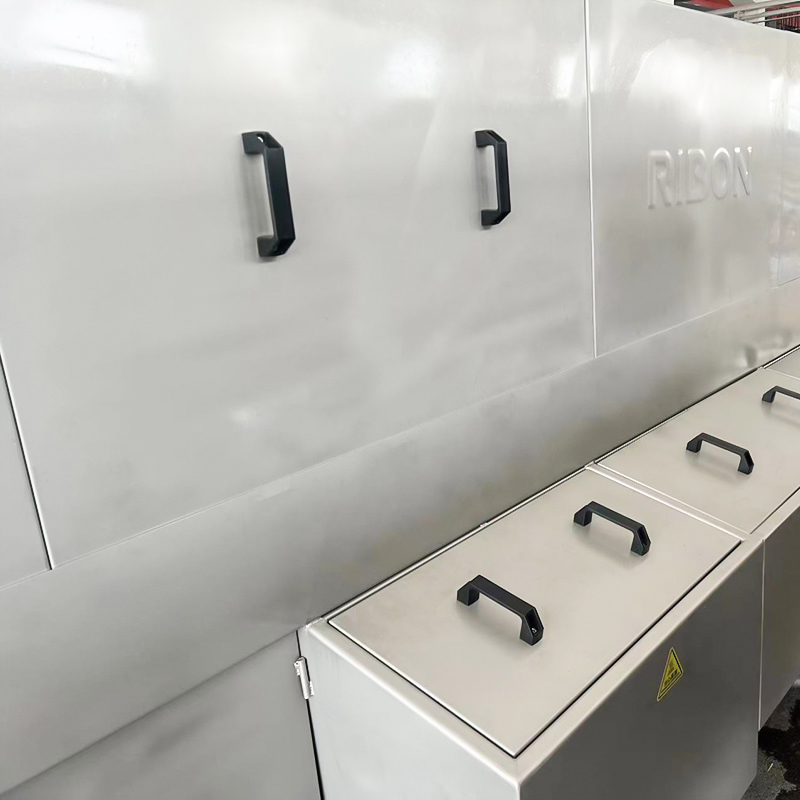 Mesin Cuci Peti Industri dengan Sterilisasi dan Pengeringan Mesin cuci ini membersihkan peti plastik dalam tiga langkah, termasuk sterilisasi air panas pada suhu 82°C. Ini menghemat air dan tenaga kerja dengan mendaur ulang air dan menawarkan fungsi pengeringan opsional, mendukung kebersihan dalam pemrosesan daging. Lihat Produk →
 Di bagian yang sama, tempat cuci tangan dan alat sterilisasi pisau terletak di samping setiap tempat pemotongan. Prosedur biasanya memerlukan sterilisasi pisau setiap 30 menit atau setelah setiap karkas, tergantung pada rencana HACCP pabrik. Menempatkan unit-unit ini dekat dengan stasiun kerja akan mencegah operator berjalan jauh, sehingga mengurangi waktu henti dan meningkatkan kepatuhan.
Memilih Jalur Pemotongan Daging Sapi: Kriteria Evaluasi Utama
Sebelum berinvestasi, tentukan throughput dalam istilah yang konkret: jumlah ekor per hari, pemotongan berat per jam, atau jumlah porsi jadi. Kemudian sesuaikan kecepatan peralatan dengan garis penyembelihan. Sebuah pabrik yang memproses 100 ekor per hari mungkin memerlukan saluran yang dapat menangani sekitar 2–3 perempat karkas per menit. Jika jalur pemotongan lebih lambat, karkas akan menumpuk dan jalur pemotongan harus terhenti; jika lebih cepat, operator mungkin tidak dapat mengimbanginya dan keselamatan akan terganggu.
| Kriteria | Apa yang Harus Diverifikasi | Risiko Umum |
|---|---|---|
| Hasil | Cocokkan kecepatan gergaji dan kecepatan konveyor dengan ritme garis pemotongan | Peralatan yang kurang dimanfaatkan atau kemacetan |
| Akurasi pemotongan | Minta spesifikasi toleransi, biasanya ±2 mm untuk berat porsi | Berat produk tidak konsisten, kehilangan trim lebih tinggi |
| Desain kebersihan | Baja tahan karat food grade, motor berperingkat IP, permukaan pembersih yang mudah diakses | Sulit dibersihkan, banyak bakteri |
| Tingkat otomatisasi | Putuskan antara pengumpanan manual dan penentuan posisi otomatis | Biaya tenaga kerja, pengulangan |
| Pemeliharaan | Verifikasi ketersediaan suku cadang dan waktu respons layanan | Downtime lama, produksi hilang |
Setiap kriteria memiliki bobot yang berbeda tergantung pada tanamannya. Untuk fasilitas dengan throughput tinggi, akurasi pemotongan dan tingkat otomatisasi sangat penting. Untuk operasi pemotongan daging yang lebih kecil, desain yang higienis dan kemudahan pemeliharaan mungkin mendominasi. Membeli peralatan dengan generator atau saluran yang nantinya dapat diperluas mengurangi risiko investasi berlebihan.
Pertanyaan umum adalah seberapa cepat saluran tersebut membayar sendiri. Dalam banyak kasus, peningkatan hasil saja dapat mengembalikan investasi dalam 18-24 bulan. Misalnya, jika sebuah pabrik memproses 50 ton daging sapi per minggu dan kehilangan hasil panen turun sebesar 1 poin persentase, maka itu berarti 0,5 ton produk tambahan yang dapat dijual per minggu. Dengan harga daging sapi pada umumnya, hal ini dapat menghasilkan pendapatan tahunan yang signifikan.
Jika pemasok menawarkan pusat tes, manfaatkanlah. Menjalankan produk Anda yang sebenarnya melalui stasiun gergaji atau deboning yang diusulkan akan menunjukkan kehilangan trim dan waktu siklus yang sebenarnya. Data itu lebih berharga daripada brosur apa pun.
Bagaimana Ribon Mendukung Operasi Pemotongan Daging Sapi
Ribon memiliki spesialisasi dalam mesin pengolah daging sejak tahun 2003. Solusi pemotongan dan penghilangan tulang daging sapi dari perusahaan ini mencakup pemecahan karkas sapi dan pemotongan lebih lanjut dengan gergaji bundar tipe meja dan tipe vertikal, peralatan penanganan peti, dan perlengkapan sanitasi. Desain modular memungkinkan pabrik memulai dengan gergaji dan beberapa peti, kemudian menambahkan stasiun seiring bertambahnya volume.
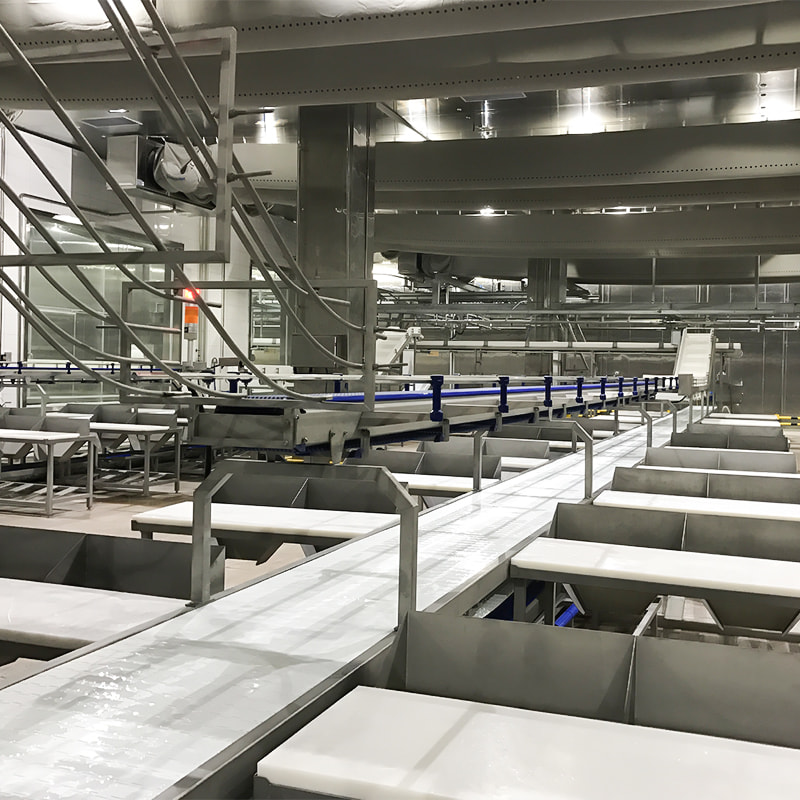 Solusi Lengkap Pemotongan dan Penghilangan Tulang Sapi Sistem modular ini mencakup pemecahan karkas secara menyeluruh, mulai dari penggergajian hingga penanganan peti. Ini mencakup desain tata letak, instalasi, dan commissioning, yang memungkinkan pabrik untuk berkembang seiring bertambahnya volume. Lihat Produk →
 Rekayasa di balik lini ini didukung oleh pusat pengujian pusat di mana pelanggan dapat menguji produk dan menyempurnakan parameter pemrosesan. Dengan lebih dari 150 paten dan stasiun kerja pascadoktoral, Ribon diposisikan untuk memenuhi persyaratan umum dan spesifik lokasi. Untuk melihat lebih dalam bagaimana a garis pemotongan dan deboning modern mengubah throughput harian, baca artikel kami tentang topik tersebut. Data peralatan yang lebih rinci dapat ditemukan di kami solusi pemotongan dan deboning halaman.
Integrasi Praktis dan Pertimbangan Purna Jual
Memasang tali pemotong daging sapi lebih dari sekadar menjatuhkan peralatan ke lantai. Anda perlu merencanakan tata letak lantai, drainase, kapasitas listrik, ventilasi, dan lokasi alat sterilisasi pisau. Pemasok yang baik akan memberikan panduan pemasangan dan pelatihan operator, dan akan kembali setelah penyalaan untuk menyesuaikan kecepatan blade, waktu konveyor, dan stasiun pemangkasan.
Selama pemasangan, pastikan lantai pemotongan memiliki drainase yang memadai dan permukaan lantai yang halus dan dapat dibersihkan. Meja kerja baja tahan karat dan lemari listrik anti percikan sangat penting. Selain itu, rencanakan selang pencucian di setiap stasiun untuk memungkinkan pembersihan cepat antar shift.
Pertimbangkan waktu tunggu suku cadang. Jika gergaji kritis rusak dan penggantian suku cadang memerlukan waktu empat minggu, waktu henti dapat memakan biaya yang jauh lebih besar dibandingkan mesin itu sendiri. Tanyakan kepada pemasok tentang stok lokal, waktu respons layanan, dan apakah diagnostik jarak jauh tersedia. Ribon, misalnya, mengekspor solusi ke seluruh dunia dan menawarkan dukungan multibahasa, yang menyederhanakan proyek lintas batas.
Jalur pemotongan daging sapi merupakan jembatan antara tempat pemotongan hewan dan rak penjualan eceran. Memilih sistem yang tepat berarti memutuskan keluaran, presisi, kebersihan, dan layanan. Untuk tanaman yang menghadapi margin yang lebih ketat, setiap poin persentase peningkatan hasil sangat berarti. Mulailah dengan menguji produk Anda pada peralatan, menetapkan tolok ukur kinerja, dan kemudian meningkatkannya. Pendekatan praktis tersebut adalah cara paling pasti untuk mengubah investasi pemotongan menjadi keuntungan produksi yang bertahan lama.